Introduction
Chemical plants operate in some of the most demanding industrial environments. From sulfuric acid and caustic soda to chlorine, solvents, and aggressive cleaning agents, the floors, platforms, and walkways face relentless chemical attack. Traditional steel grating, even hot-dip galvanized or stainless steel, eventually succumbs to corrosion. That is why FRP grating for chemical plants has become the go-to solution for plant engineers and safety managers worldwide.
FRP — fiberglass reinforced plastic — grating offers a unique combination of chemical resistance, structural strength, and long service life that makes it ideally suited for chemical processing environments. Unlike steel or aluminum, it will not rust, rot, or corrode when exposed to harsh chemicals. It is lightweight, non-conductive, and requires minimal maintenance over decades of use.
This selection guide will help you understand why FRP grating has become the preferred flooring and platform material, explore the different types and resin systems available — including vinyl ester options for high-corrosion areas — and provide practical guidance on selecting, installing, and maintaining grating in your facility.
FRP Grating for Chemical Plants: Why It Is the Standard Choice
The primary reason plant engineers choose fiberglass reinforced plastic grating is its inherent resistance to chemical corrosion. The fiberglass reinforcement is embedded in a resin matrix that acts as a chemical barrier. Unlike steel, which oxidizes when exposed to moisture and acids, FRP grating remains unaffected by a wide range of corrosive substances.
Superior Chemical Corrosion Resistance
The corrosion resistance mechanism depends on the resin formulation. The resin matrix creates a cross-linked polymer network that resists chemical attack at the molecular level. Even when exposed to concentrated acids, alkalis, or organic solvents, properly selected grating maintains its structural integrity. This makes it particularly valuable in chemical plants where spills, splashes, and fumes are daily occurrences.
FRP vs Steel and Stainless Steel in Chemical Plants
When comparing FRP to stainless steel, FRP comes out ahead in several critical areas. Stainless steel grades 304 and 316 offer good corrosion resistance but can still suffer from pitting, crevice corrosion, and stress corrosion cracking — especially in chloride-rich environments common in processing plants. FRP grating for chemical plants is completely immune to electrochemical corrosion, giving it a decisive advantage.
Why choose FRP over steel? The answer comes down to three factors: longevity, safety, and total cost of ownership. Carbon steel grating in a chemical plant may require replacement every 2-5 years due to corrosion. Stainless steel can last 10-15 years but at a higher upfront cost. FRP typically delivers 20+ years of service with minimal maintenance. Additionally, FRP is slip-resistant, non-sparking, and non-conductive — critical safety features where explosive gases or electrical hazards may be present.
Fire Resistance
A common question is whether FRP grating is fire-resistant for chemical plant use. Standard FRP grating is combustible, but fire-retardant grades are widely available. These formulations use halogenated resins or additives that meet ASTM E84 Class I standards with a flame spread index of 25 or less. For chemical plants requiring fire-rated materials, specifying fire-retardant grade or phenolic resin grating provides the highest level of fire protection with low smoke generation.
Types of FRP Grating Used in Chemical Plants
Chemical plants typically use two main types of FRP grating: molded and pultruded. Each has distinct characteristics that make it suitable for different applications within a facility.
Molded Grating
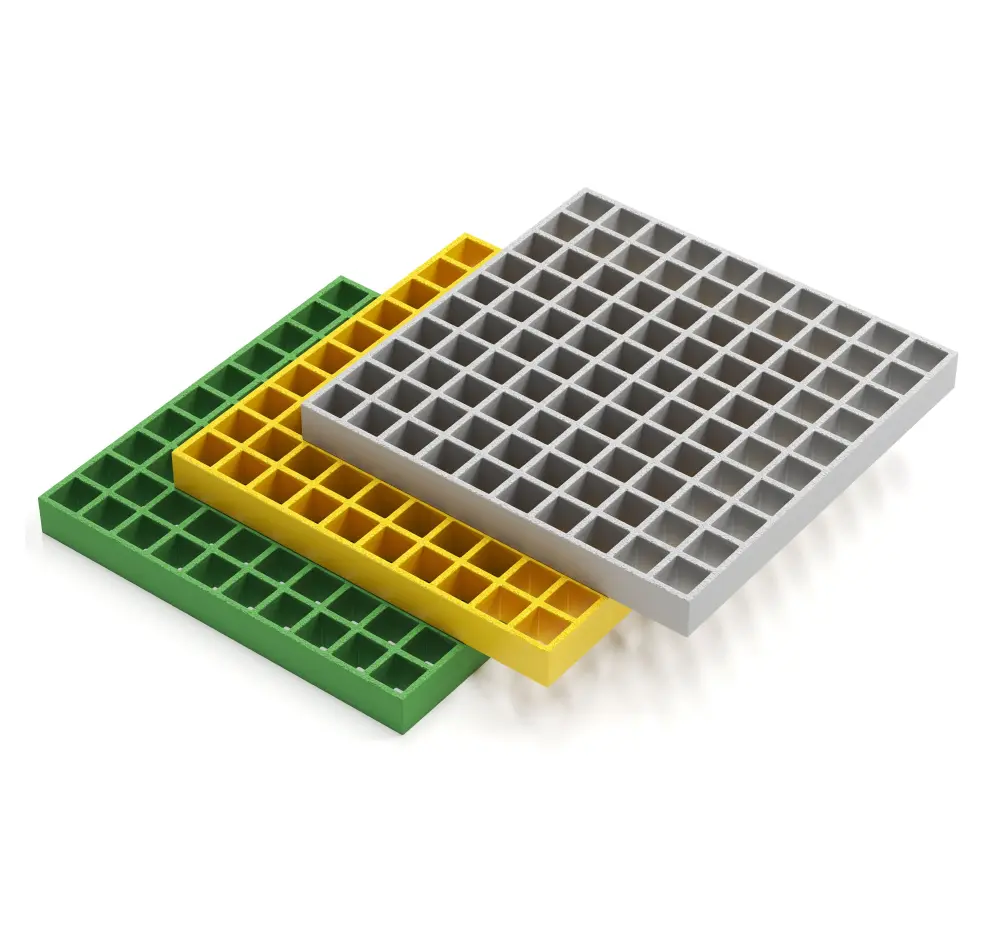
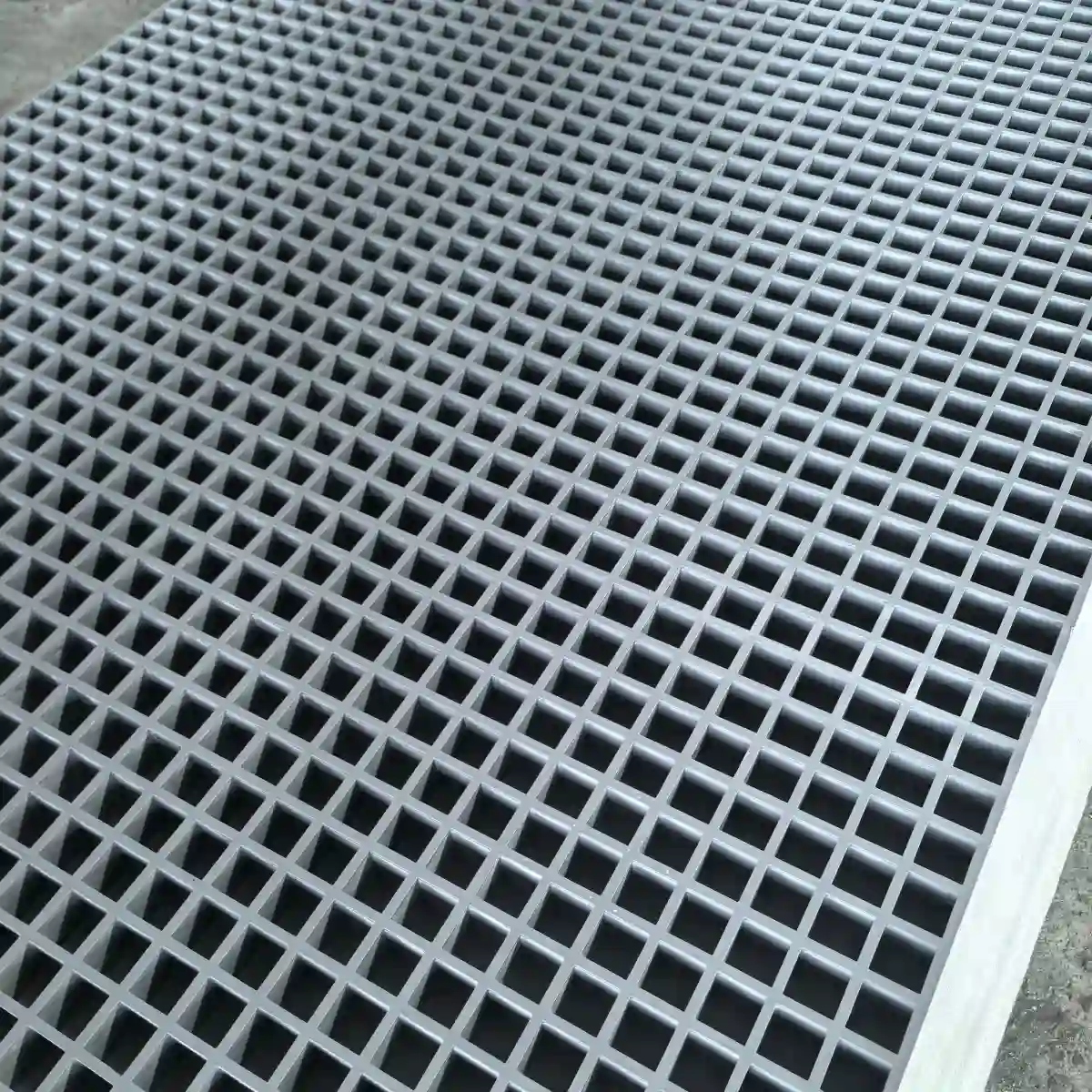
Molded grating is manufactured by layering continuous fiberglass strands with resin in a heated mold under pressure. This creates a one-piece, integral structure with uniform surface. Molded grating is the most common type for plant flooring because of its excellent chemical resistance, competitive cost, and high strength-to-weight ratio. It is available in various mesh patterns, with square mesh being the most popular for general walkways and platforms.
Pultruded Grating
Pultruded grating is made by pulling continuous fiberglass rovings through a resin bath and then through a heated die. This produces higher strength in the longitudinal direction, making it ideal for longer unsupported spans or higher load capacities. Pultruded grating is often chosen for platforms, mezzanines, and equipment access structures where load requirements are more demanding.
Resin Systems
Beyond the manufacturing method, the resin system is the most critical factor in determining chemical resistance. The three primary resin types available are:
- Polyester resin — The most economical option, suitable for mild chemical exposure such as water, weak acids, and alkalis.
- Vinyl ester resin — The preferred choice for chemical plants. Offers significantly better resistance to acids, alkalis, bleaches, and organic solvents across a broad pH range of 1-13.
- Phenolic resin — Offers the best fire resistance with low smoke emission, though chemical resistance is generally lower than vinyl ester.
For environments handling aggressive chemicals, vinyl ester is overwhelmingly the recommended choice due to its superior chemical resistance and long service life.
Vinyl Ester FRP Grating — The Gold Standard for Chemical Resistance
When plant engineers ask what the best grating for chemical plant flooring is, the answer is almost always vinyl ester. Vinyl ester FRP grating combines the excellent mechanical properties of epoxy resins with the superior chemical resistance of unsaturated polyester, making it uniquely suited for harsh environments found in process plants.
What Is Vinyl Ester FRP Grating?
Vinyl ester FRP grating is manufactured using vinyl ester resin instead of the more common polyester. Vinyl ester resins are created by reacting epoxy resin with unsaturated carboxylic acids, producing a thermoset polymer with significantly better corrosion resistance. The molecular structure contains fewer ester groups than polyester, making it more resistant to hydrolysis and chemical attack.
Benefits in Chemical Plant Applications
As a corrosion resistant vinyl ester FRP grating, this material offers substantial advantages for chemical processing areas:
- Broad chemical resistance — Handles acids, alkalis, bleaches, organic solvents, and oxidizing agents across pH 1-13. This includes sulfuric acid, hydrochloric acid, sodium hydroxide, chlorine, and many other chemicals common in plants.
- Superior corrosion barrier — The dense, cross-linked resin prevents chemical penetration to the glass fiber reinforcement, unlike polyester which can allow chemical migration along the fiber-resin interface.
- Extended service life — Typically lasts 20-30 years in plant environments, significantly outperforming polyester (5-10 years) and even stainless steel in many applications.
- Temperature resistance — Withstands continuous operating temperatures up to 120-150°C (250-300°F), depending on the specific formulation.
Recommended Application Areas
Vinyl ester FRP grating for chemical plants is particularly recommended for: acid storage and handling areas, caustic soda processing zones, chlor-alkali production facilities, fertilizer and petrochemical plants, solvent storage and transfer stations, bleach and oxidizing chemical areas, and pharmaceutical intermediate processing areas.
In all of these environments, the corrosion resistance of vinyl ester provides reliable, long-term service that justifies its selection over standard alternatives.
How to Select the Right FRP Grating for Your Chemical Plant
Selecting the right grating for your chemical plant requires careful evaluation of several factors. The wrong choice can lead to premature failure, safety hazards, and costly replacements. Here is a systematic approach to making the right decision.
1. Identify the Chemical Environment
Catalog all chemicals that the grating will be exposed to, including concentrations and temperatures. Consult chemical resistance charts from manufacturers to determine which resin system is compatible. For mixed environments with acids, alkalis, and solvents, a corrosion resistant vinyl ester FRP grating is typically the safest and most durable choice.
2. Determine Load Requirements
Floors and platforms must support foot traffic, equipment, piping, and sometimes vehicular traffic. Grating is available in different thicknesses and span configurations to meet load requirements. Refer to FRP grating load tables to select the right panel thickness and support spacing. Heavy-duty molded grating is recommended for areas with forklift or pallet jack traffic.
3. Evaluate Fire Resistance Needs
For facilities processing flammable materials, fire-retardant grade FRP grating meeting ASTM E84 Class I or Class II is available. For maximum fire protection, phenolic resin grating offers excellent fire resistance with low smoke generation.
4. Consider Surface Characteristics
Floors in chemical plants are frequently wet from spills and washdowns. Grating with an integrally molded grit surface — using silica sand or aluminum oxide — provides superior slip resistance. Most molded grating comes with a concave/convex surface pattern that improves traction naturally.
Vinyl Ester vs Polyester: Comparison
| Property | Vinyl Ester | Standard Polyester |
|---|---|---|
| Chemical resistance | Excellent (pH 1-13) | Good (pH 4-10) |
| Service life in chemical plants | 20-30 years | 5-10 years |
| Temperature resistance | Up to 150°C (300°F) | Up to 80°C (175°F) |
| Relative cost | Higher (premium) | Lower (economy) |
While vinyl ester commands a higher initial price, its extended service life and superior chemical resistance deliver lower total cost of ownership in demanding environments.
Installation Best Practices for FRP Grating in Chemical Plant Environments
Proper installation is critical to ensuring your grating performs as expected over its service life. Unlike steel, FRP requires specific techniques to avoid damage and maximize longevity.
Handling and Cutting
Handle grating carefully to avoid impact damage to the resin surface. Use carbide-tipped or diamond blades for clean cuts without delamination. Always wear appropriate PPE including a dust mask, as FRP dust can irritate the skin and respiratory system. Cut in well-ventilated areas or use dust collection systems.
Support Structure
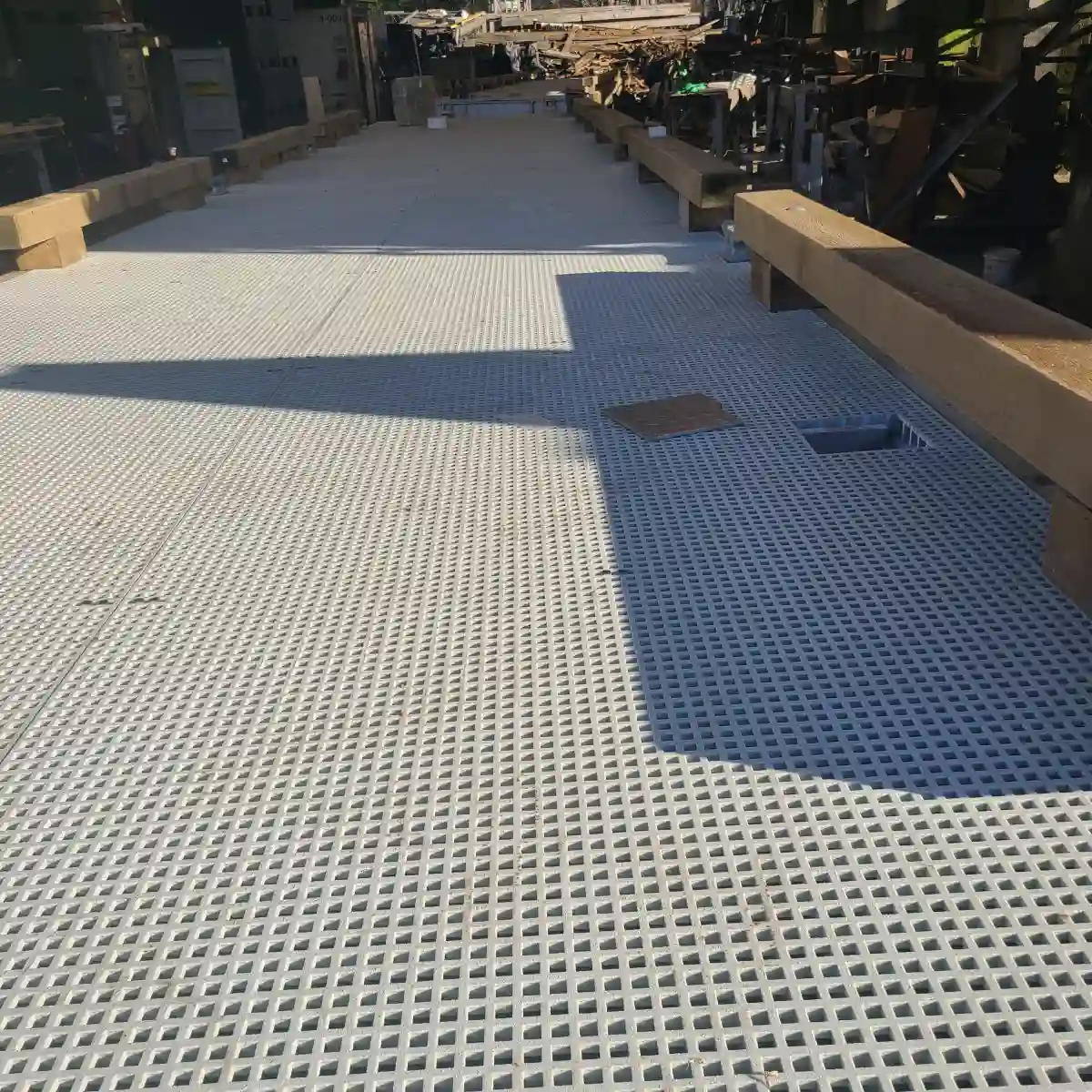
FRP grating requires proper support to achieve its rated load capacity. Steel, stainless steel, or FRP structural supports can be used. The support structure must be level and provide full bearing for the panels. Standard bearing width is at least 1 inch (25 mm) for molded and 1.5 inches (38 mm) for pultruded grating. Ensure support spacing follows the manufacturer load tables.
Fastening Methods
Never weld FRP grating — heat damages the resin matrix. Instead use mechanical fastening systems:
- Hold-down clips — Stainless steel or FRP clips that secure grating without drilling. The most common method for chemical plant installations.
- Through-bolting — For high-traffic areas. Holes should be drilled, not punched, to avoid cracking the resin.
- Countersunk screws — Suitable for wood or FRP support structures. Use compatible materials to prevent galvanic corrosion.
Thermal Expansion
FRP expands and contracts with temperature changes more than steel. In elevated-temperature areas, leave a 3-6 mm (1/8-1/4 inch) expansion gap between panels and at perimeters. Use slotted or oversized holes in fasteners to accommodate thermal movement.
Chemical Plant Best Practices
- Install grating after all welding, painting, and heavy construction is complete to avoid surface contamination.
- Seal cut edges with compatible resin or manufacturer-recommended edge sealant — especially important in plants where exposed fibers can wick chemicals into the panel.
- For aggressive chemical spill areas, consider a continuous fiberglass liner or drip tray beneath the grating for secondary containment.
- Inspect fasteners and supports regularly during the first year, retightening as needed.
- Clean using mild detergents and water. High-pressure washing is acceptable below 3,000 psi.
Cost Considerations for FRP Grating in Chemical Plants
The cost of grating for chemical plants varies depending on resin type, manufacturing method, thickness, and surface finish. Understanding these factors helps plant managers make informed budget decisions.
Typical Price Ranges
- Polyester molded grating — $15-25 per square foot. Most economical, suitable for mild chemical exposure.
- Vinyl ester molded grating — $25-40 per square foot. The recommended choice for chemical plants.
- Pultruded grating (polyester) — $20-35 per square foot. Higher strength for longer spans.
- Vinyl ester pultruded grating — $30-50 per square foot. Combines high strength with premium chemical resistance.
- Phenolic resin grating — $35-55 per square foot. Fire-resistant option for high-risk areas.
Installation costs typically add $5-15 per square foot depending on complexity and access conditions.
Total Cost of Ownership Comparison
When evaluating overall costs, consider the full life cycle:
- Carbon steel — Lowest initial cost ($10-18/sq ft installed), but replacement every 2-5 years in chemical environments plus ongoing maintenance.
- Stainless steel 304/316 — Moderate to high initial cost ($30-60/sq ft installed). Lasts 10-15 years but vulnerable to chloride and acid attack.
- Vinyl ester FRP grating — Moderate initial cost ($35-55/sq ft installed). Lasts 20-30+ years with virtually no maintenance, making it the most cost-effective solution over the full life cycle.
Despite the higher upfront cost compared to carbon steel, premium vinyl ester grating delivers the lowest total cost of ownership in aggressive chemical environments due to its exceptional durability and minimal maintenance requirements.
Conclusion
Choosing the right flooring and platform material for chemical processing facilities is a critical decision that impacts safety, operational efficiency, and long-term maintenance costs. This guide has covered the key factors you need to evaluate:
- Why FRP outperforms steel and stainless steel in chemical environments due to its inherent corrosion resistance, non-conductive properties, and long service life.
- The types available — molded and pultruded — and which suits different applications.
- The critical role of resin selection, with vinyl ester FRP grating for chemical plants being the gold standard for demanding environments.
- Selection criteria based on chemical exposure, load requirements, fire resistance, and surface characteristics.
- Installation best practices that maximize service life.
- Cost analysis showing premium resin systems offer the lowest total cost of ownership.
Whether you are building a new processing facility, retrofitting existing flooring, or replacing corroded steel grating, FRP offers the most reliable, cost-effective solution available. For assistance selecting the right product for your specific chemical environment, consult with manufacturers who can provide detailed chemical resistance data and load ratings for your application.