Introduction
When industrial facilities handle aggressive chemicals, high temperatures, and corrosive fumes, the choice of flooring and walkway material becomes critical to safety, longevity, and operational efficiency. Vinyl ester FRP grating has emerged as the premium solution for environments where standard materials fail prematurely. This comprehensive guide explores everything you need to know about this advanced composite — from its composition and manufacturing to its ideal use as vinyl ester FRP grating for chemical plants, wastewater facilities, and other demanding applications.
Whether you are designing a new chemical plant, upgrading a wastewater treatment facility, or simply evaluating corrosion resistant vinyl ester FRP grating for your next project, this article will answer your most pressing questions and help you make an informed purchasing decision.
'What Is Vinyl Ester FRP Grating?
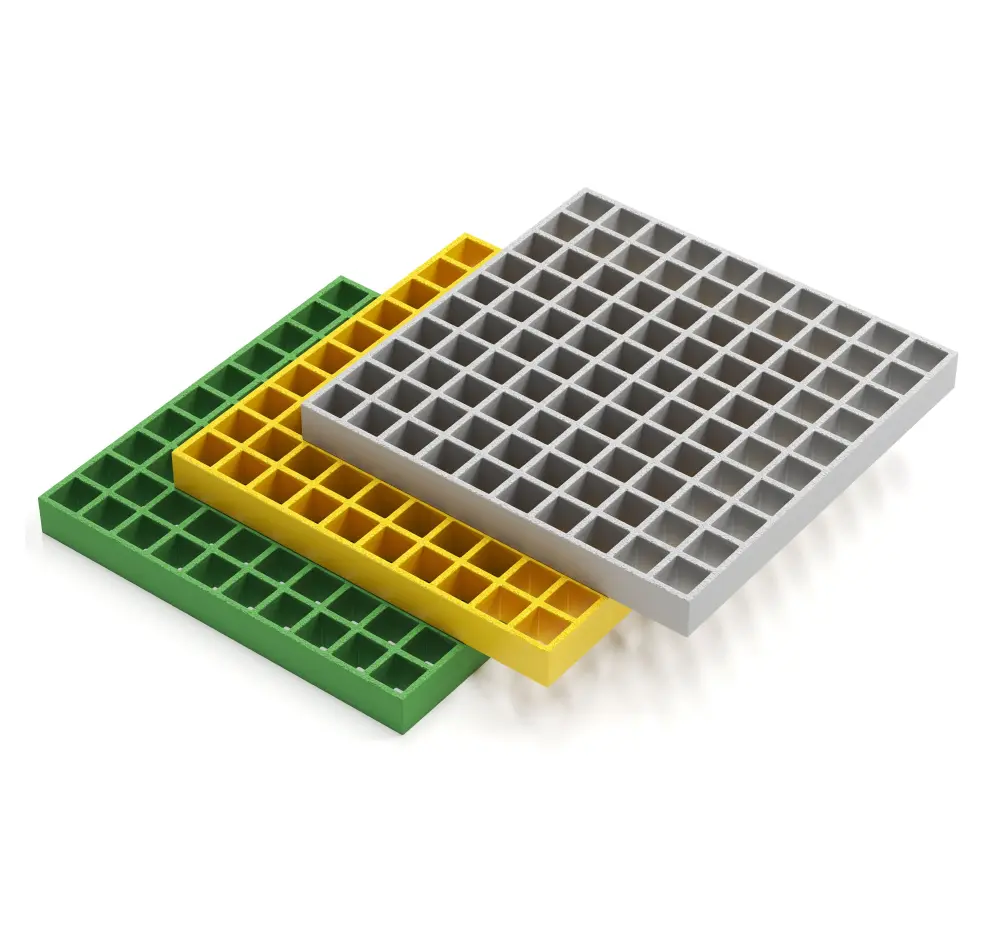
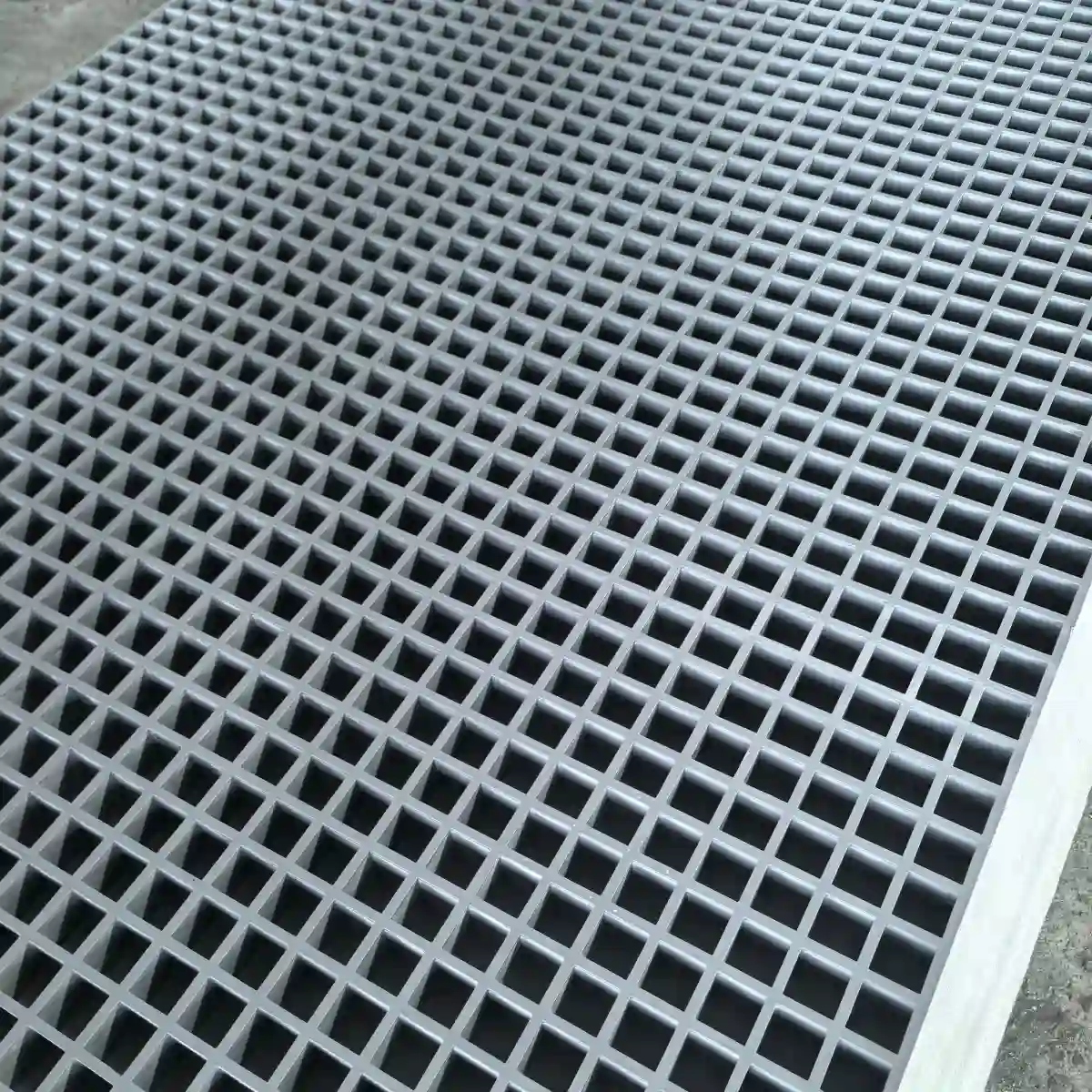
Vinyl ester FRP grating is a high-performance composite grating made from fiberglass reinforcement embedded in a vinyl ester resin matrix. Unlike standard polyester-based FRP grating, the vinyl ester resin formulation delivers superior chemical resistance, thermal stability, and mechanical strength, making it the preferred choice for demanding industrial environments.
Composition and Manufacturing Process
Vinyl ester FRP grating is manufactured through a pultrusion or compression molding process. Continuous fiberglass rovings are saturated with liquid vinyl ester resin and pulled through a heated die to form a cured, rigid profile. The resulting composite structure combines the tensile strength of glass fibers (typically 30–50% by volume) with the corrosion-resistant properties of the vinyl ester matrix.
The key raw materials include:
- Vinyl ester resin: A thermosetting polymer that bridges the gap between polyester and epoxy resins in performance. It offers excellent chemical resistance while maintaining good mechanical properties at elevated temperatures.
- Fiberglass reinforcement: E-glass or ECR-glass fibers provide structural strength. For extreme environments, corrosion-resistant (C-glass) veils may be added to the surface layers.
- Additives and fillers: UV stabilizers, fire-retardant compounds, and color pigments can be incorporated to meet specific application requirements.
How Vinyl Ester Resin Enhances Chemical Resistance
The vinyl ester resin molecule contains fewer ester groups than polyester resin, which significantly reduces sites vulnerable to hydrolysis and chemical attack. This molecular structure gives vinyl ester resin FRP grating exceptional resistance to a wide range of corrosive media, including strong acids (sulfuric, hydrochloric, nitric), alkalis (sodium hydroxide), organic solvents, and oxidizing agents.
Vinyl ester resins also exhibit excellent wet-out characteristics, meaning they fully encapsulate the glass fibers during manufacturing, eliminating micro-voids where corrosive chemicals could penetrate. This results in a dense, impermeable composite that maintains its integrity even after years of exposure to harsh chemicals.
Vinyl Ester vs Polyester FRP Grating: Which Is Better?
The debate of vinyl ester vs polyester FRP grating is one of the most common questions engineers and procurement managers face. While both materials share a fiberglass-reinforced composite construction, their performance characteristics differ substantially.
Chemical Resistance Comparison
Polyester resin FRP grating offers good resistance to mild chemicals and is suitable for general industrial use. However, when exposed to strong acids, alkalis, or organic solvents, polyester-based grating can degrade rapidly. Corrosion resistant vinyl ester FRP grating, by contrast, withstands a much broader range of aggressive chemicals. In ASTM C581 testing, vinyl ester laminates typically retain 85–95% of their flexural strength after 12 months of immersion in 25% sulfuric acid, while polyester laminates retain only 40–60% under the same conditions.
| Chemical Environment | Polyester FRP | Vinyl Ester FRP |
|---|---|---|
| Sulfuric Acid (25%) | Fair (40-60% retention) | Excellent (85-95% retention) |
| Sodium Hydroxide (10%) | Poor | Good |
| Hydrochloric Acid (10%) | Good | Excellent |
| Organic Solvents | Poor-Fair | Good-Excellent |
| Chlorine / Bleach | Poor | Excellent |
Mechanical Properties and Load Capacity
Both vinyl ester and polyester FRP gratings offer excellent strength-to-weight ratios, but vinyl ester formulations typically deliver 10–15% higher flexural strength and modulus due to the superior fiber-matrix bond. When comparing load capacity to standard polyester grating, the vinyl ester product can handle equivalent or higher loads with a smaller profile, making it more economical in weight-sensitive applications. Both types meet OSHA standard load ratings (e.g., ANSI/NAAMM FP 100-15) including pedestrian, light industrial, and heavy industrial classifications.
Cost Comparison: Vinyl Ester vs Polyester
This brings us to one of the most frequently asked questions: how much does vinyl ester FRP grating cost? This product typically costs 30–60% more than polyester FRP grating. The price difference varies based on resin formulation, glass content, profile depth, and quantity ordered. However, the total cost of ownership often favors vinyl ester. A typical installation can last 15–25 years in aggressive chemical environments, whereas polyester FRP grating may require replacement within 5–8 years. Factoring in replacement costs, downtime, and labor, the vinyl ester option delivers superior long-term value.
'Key Benefits of Vinyl Ester Resin in FRP Grating
Understanding the benefits of vinyl ester resin in FRP grating is essential for specifying the right material for your application. Here are the key advantages that make vinyl ester resin FRP grating the preferred choice for demanding environments:
- Superior chemical resistance: The vinyl ester matrix withstands over 400 different corrosive chemicals, including strong acids, bases, solvents, and oxidizing agents. This makes it the go-to choice for chemical plants and other aggressive industrial environments.
- High-temperature performance: Vinyl ester composites maintain their mechanical properties at continuous operating temperatures up to 180–230°F (82–110°C), depending on the specific formulation. This answers an important question: is vinyl ester FRP grating suitable for high-temperature environments? — Yes, it significantly outperforms polyester in thermal resistance.
- Excellent mechanical strength: With flexural strengths ranging from 30,000 to 50,000 psi and tensile moduli of 1.5–3.0 × 10⁶ psi, this composite grating provides structural integrity comparable to steel at a fraction of the weight.
- Fire retardant properties: Many vinyl ester resin systems can be formulated to meet Class 1 flame spread ratings (ASTM E84) and self-extinguishing characteristics per UL 94 V-0.
- UV resistance: With appropriate additives, the material can be formulated for excellent outdoor weatherability without significant degradation from sunlight exposure.
- Low maintenance: Unlike steel grating, this composite does not require painting, coating, or galvanizing. It resists rust, rot, and fungal growth, reducing lifecycle maintenance costs dramatically.
- Non-conductive and non-magnetic: The composite construction provides electrical insulation and is non-sparking, making it suitable for electrical substations and hazardous environments.
- Weight savings: At approximately one-quarter the weight of steel and one-third the weight of aluminum, this grating reduces structural support requirements and simplifies installation.
These benefits make vinyl ester resin-based grating an ideal investment for facilities that prioritize safety, durability, and long-term operational efficiency over short-term material cost savings.
'Industrial Applications of Vinyl Ester FRP Grating
This type of grating finds extensive use across numerous industrial sectors where corrosion resistance is non-negotiable. Here are the primary application areas:
Chemical Plants and Processing Facilities
Chemical plants are the single largest market for vinyl ester FRP grating for chemical plants. Applications include:
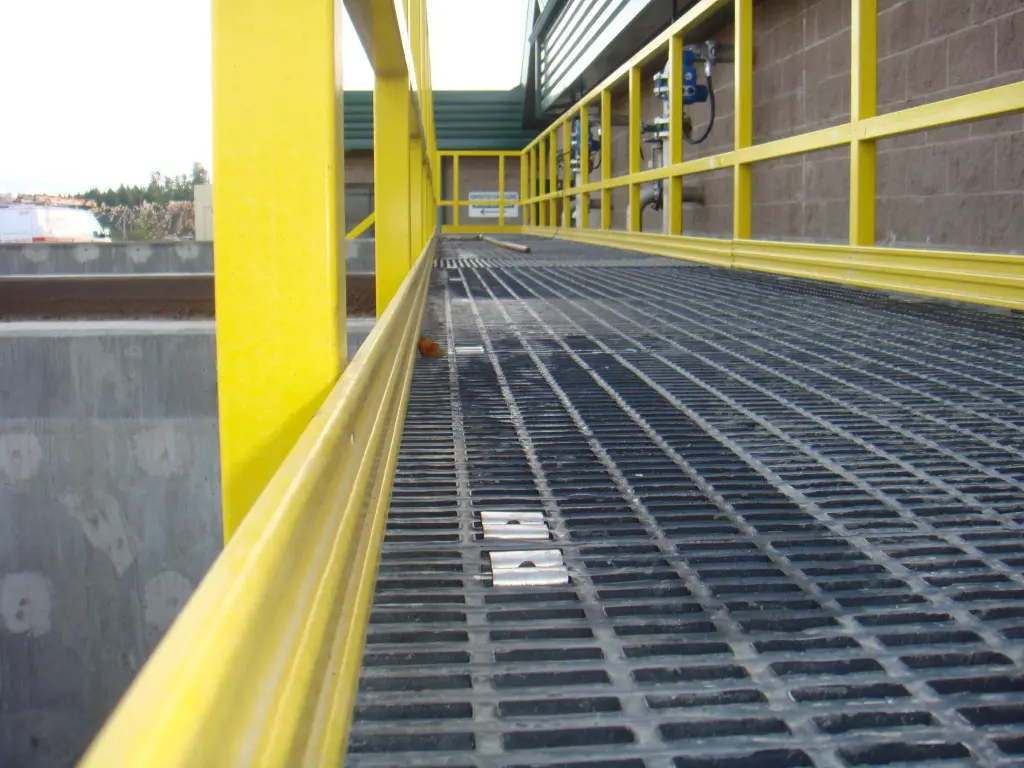
- Walkways and platforms around acid storage tanks and reactor vessels
- Flooring in chemical processing areas with frequent acid spills
- Stair treads and mezzanine flooring in corrosive atmosphere zones
- Cable tray covers and trench covers in chemical handling areas
- Dike and secondary containment flooring around chemical storage
The combination of spill resistance, fume resistance, and structural reliability makes the corrosion resistant vinyl ester formulation the standard specification for many chemical processing facilities worldwide.
Wastewater Treatment Plants
Vinyl ester FRP grating for wastewater treatment is specifically valued for its resistance to hydrogen sulfide (H₂S), chlorine gas, and the corrosive atmosphere common in treatment facilities. Key applications include:
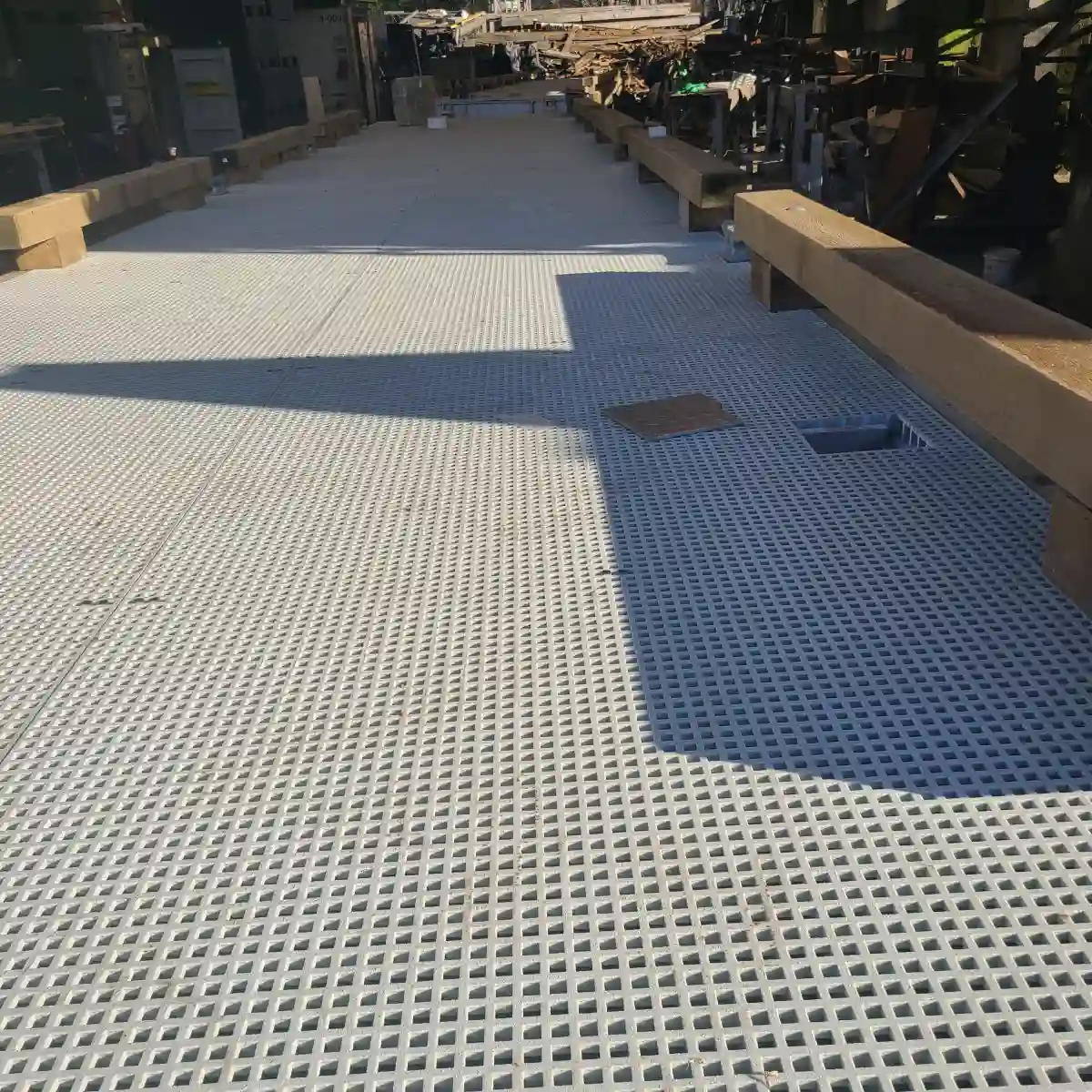
- Grating over aeration basins and clarifiers
- Walkways in chlorine contact chambers
- Media support grating in biofiltration systems
- Platforms around chemical feed systems for pH adjustment and disinfection
Unlike steel or aluminum, this composite material will not corrode in the humid, chemically aggressive environment of a wastewater treatment plant, even after decades of continuous exposure.
High-Temperature Environments
Regarding the question is vinyl ester FRP grating suitable for high-temperature environments? — the answer is a qualified yes. Vinyl ester resin systems can withstand continuous service temperatures up to 230°F (110°C) for general-purpose formulations, with specialized high-heat variants rated for up to 300°F (149°C). Applications include:
- Platforms near hot process equipment and heat exchangers
- Flooring in pulp and paper mill bleach plants
- Walkways in metal pickling and plating operations
- Grating in pharmaceutical processing areas requiring hot CIP (Clean-in-Place) cycles
Longevity and Durability in Corrosive Environments
One of the most important considerations for engineers and facility managers is how long does vinyl ester FRP grating last in corrosive environments? The answer depends on the specific chemical exposure, temperature, and mechanical loading conditions, but field data consistently demonstrates exceptional longevity.
In properly specified applications, this composite material typically delivers a service life of 15–25 years, and in many cases can exceed 30 years with appropriate maintenance. For example, vinyl ester FRP grating for wastewater treatment plants routinely lasts 20–30 years when exposed to hydrogen sulfide and chlorine. Here is how various environments affect durability:
| Environment Type | Expected Service Life | Key Factors |
|---|---|---|
| Chemical plant (acid exposure) | 15–25 years | Concentration, temperature, spill frequency |
| Wastewater treatment (H₂S / chlorine) | 20–30 years | Gas concentration, humidity, UV exposure |
| Food processing (CIP chemicals, steam) | 15–20 years | Thermal cycling, cleaning chemical types |
| Pharmaceutical (solvents, disinfectants) | 20–25 years | Solvent types, temperature, load frequency |
| Marine / offshore (saltwater, UV) | 15–20 years | UV stabilizer package, wave impact |
The superior durability of the vinyl ester formulation stems from several material properties:
- Hydrolysis resistance: The resin contains fewer ester linkages than polyester, making it significantly more resistant to hydrolysis (chemical breakdown by water). This is critical in wastewater and aqueous chemical environments.
- Oxidation resistance: The vinyl ester matrix maintains its integrity in oxidizing environments such as chlorine dioxide, hydrogen peroxide, and nitric acid — chemicals that rapidly degrade polyester-based composites.
- Thermal stability: The cross-linked molecular structure of cured vinyl ester resin resists thermal degradation at elevated temperatures, preventing embrittlement and micro-cracking over time.
- Fatigue resistance: Vinyl ester composites exhibit better fatigue life than polyester, maintaining structural integrity under repeated loading cycles common in industrial walkway applications.
To maximize service life, proper specification should account for the specific chemical environment, operating temperature range, mechanical load requirements, and UV exposure. A well-specified installation typically pays for itself multiple times over through avoided replacement costs and reduced downtime.
'Load Capacity and Performance Specifications
Understanding the vinyl ester FRP grating load capacity is crucial for safe and compliant specification. Like all FRP gratings, vinyl ester products are rated according to standardized load tests. Here is what you need to know about performance specifications:
Standard Load Ratings
FRP grating load ratings follow industry standards such as ANSI/NAAMM FP 100-15 (Fiberglass Grating Manual of Practice). Ratings are based on the grating's ability to support concentrated or uniform loads at a given span, typically measured at a deflection of L/100 or L/200 (span divided by 100 or 200).
| Load Classification | Concentrated Load | Uniform Load | Typical Applications |
|---|---|---|---|
| Pedestrian (Light Duty) | 250–500 lb | 40–60 psf | Catwalks, mezzanine floors |
| Industrial (Medium Duty) | 1,000–2,000 lb | 100–150 psf | Platforms, trench covers |
| Heavy Industrial (Heavy Duty) | 3,000–5,000 lb | 250–400 psf | Truck access, equipment platforms |
Vinyl Ester vs Polyester Load Performance
When comparing load capacity to standard polyester-based grating, vinyl ester formulations typically outperform by 10–15% in flexural strength and modulus. This means a vinyl ester grating of the same profile depth and glass content can carry more load at the same deflection limit — or alternatively, a lighter profile can be used to achieve the same load rating as a heavier polyester profile.
Key Performance Factors
- Profile depth: Deeper profiles (1.5", 2", 2.5") provide higher load capacity at longer spans. A 2"-deep vinyl ester grating typically supports 3x the load of a 1"-deep grating at the same span.
- Glass content: Higher glass-to-resin ratios increase stiffness and strength. Premium grade material with 50–55% glass content delivers maximum load capacity.
- Span configuration: Load capacity decreases as support span increases. Always consult manufacturer load tables for the specific span configuration of your installation.
- Temperature derating: At elevated temperatures (>150°F), FRP grating undergoes some strength reduction. The vinyl ester composite retains a higher percentage of its room-temperature strength compared to polyester — typically 80–85% at 200°F versus 60–70% for polyester.
For precise load capacity requirements, engineers should request manufacturer-specific load tables for the exact resin system, profile geometry, and span conditions of their project.
'How to Choose the Right Vinyl Ester FRP Grating
Making the right selection between vinyl ester vs polyester FRP grating — or between different vinyl ester formulations — depends on several factors. Here is a practical guide to how to choose between vinyl ester and polyester FRP grating for your project:
Decision Checklist
| Consideration | Choose Vinyl Ester When… | Choose Polyester When… |
|---|---|---|
| Chemical exposure | Strong acids, alkalis, solvents, or oxidizing agents present | Only mild chemicals (water, dilute salts, mild acids) |
| Operating temperature | Continuous temperature >150°F (65°C) or thermal cycling | Ambient temperatures only, below 150°F |
| Expected service life | 15+ year life required in corrosive environment | 5–10 year life acceptable |
| Budget | Lower total cost of ownership desired despite higher upfront cost | Minimal upfront cost is the primary driver |
| Regulatory / compliance | Must meet strict chemical resistance or fire code requirements | Standard industrial compliance is sufficient |
| Installation environment | Wet, humid, or submerged conditions with aggressive chemicals | Dry, indoor, or protected environment |
Specification Tips
- Match the resin to the chemical list: Always consult the resin manufacturer's chemical resistance guide. Not all vinyl ester formulations are equal — some are optimized for acid resistance, others for solvent resistance or high-temperature performance.
- Consider the corrosion veil: For extreme environments, specify a C-glass or synthetic veil on the grating surface to add an extra layer of chemical resistance.
- Evaluate fire requirements: If the application requires flame spread ratings or self-extinguishing properties, verify that the selected vinyl ester resin system includes appropriate fire-retardant additives.
- Factor in installation costs: While vinyl ester FRP grating cost is higher than polyester, the lighter weight of FRG grating reduces installation labor and structural support costs. Factor the total installed cost into your comparison.
- Request samples: Before final specification, request test coupons for chemical immersion testing under your specific process conditions. This provides the most reliable prediction of in-service performance.
By systematically evaluating these factors, you can confidently specify the optimal grating material for your facility's unique requirements — balancing performance, longevity, and budget.
Conclusion
Vinyl ester FRP grating represents the gold standard for corrosion-resistant industrial flooring and walkway systems. Its superior chemical resistance, thermal stability, structural strength, and exceptional durability make it the material of choice for chemical plants, wastewater treatment facilities, pharmaceutical operations, and any environment where standard materials cannot survive.
While the upfront cost is higher than polyester alternatives, the total cost of ownership — factoring in 15–25+ years of service life with minimal maintenance — makes the vinyl ester formulation the economically and technically superior choice for demanding applications.
Key takeaways to remember:
- This composite grating offers vastly superior chemical resistance compared to polyester, especially against strong acids, bases, and solvents.
- Its high-temperature capability (180–230°F continuous) makes it suitable for thermal environments where polyester fails.
- With proper specification, corrosion resistant vinyl ester FRP grating delivers 15–25 years of reliable service in aggressive chemical environments.
- The material's load capacity meets or exceeds polyester FRP grating of equivalent dimensions, with 10–15% higher strength in many formulations.
- Applications span chemical plants, wastewater treatment, pulp and paper, pharmaceutical, and many other industries where corrosion resistance is critical.
When selecting grating for your next project, carefully evaluate the chemical environment, temperature range, load requirements, and expected service life. Where conditions are aggressive, this material is not just an option — it is the engineered solution. Contact our team for detailed load tables, chemical resistance data, and a quote tailored to your specific project requirements.
'